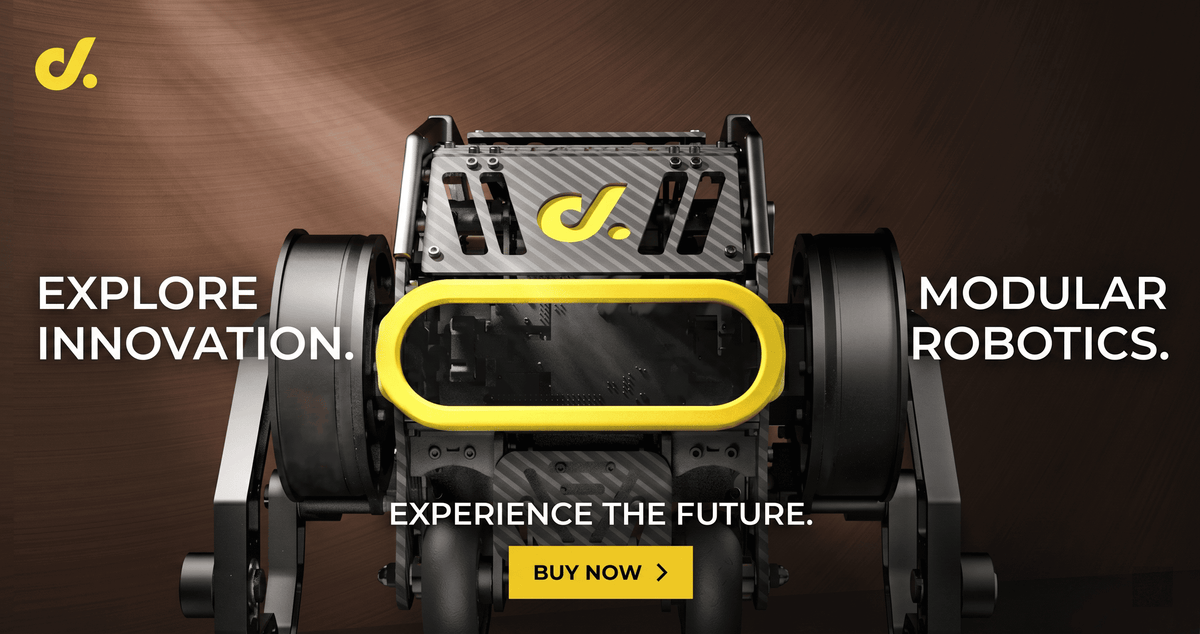
A product roadmap around direct drive robot modules should define actuator specifications, software architecture, manufacturing processes, and application expansion from the first prototype to mass production. A practical roadmap usually covers 3–5 years, including torque classes from small robotic joints below 20 Nm to humanoid-scale actuators above 200 Nm, while improving efficiency, reliability, and production consistency through each generation.
Direct drive robot modules are becoming an important actuator option for robotic platforms because they combine motors, encoders, electronics, and mechanical structures into one integrated unit. Traditional robotic joints often rely on harmonic drives, planetary gearboxes, or other transmission systems to increase torque. Direct drive designs remove the reduction mechanism and generate joint torque directly from the motor.
The change affects product planning because the actuator becomes part of the robot platform architecture. A company developing a robotic arm, humanoid robot, or autonomous machine must consider the module design several years before final product release.
“The actuator selected during early development can influence robot weight, control performance, maintenance requirements, and production cost throughout the product lifecycle.”
Many robotics companies now evaluate actuator platforms instead of individual motors. A module family with shared mechanical dimensions and software interfaces can support several robot models. In industrial robotics, product generations commonly remain active for 5–10 years, so actuator compatibility across future designs becomes important.
The first stage of a direct drive module roadmap starts with defining measurable engineering targets. A robotics company needs to determine torque requirements, speed range, precision level, operating hours, and environmental conditions before selecting motor technology.
For example, different robot applications require different actuator specifications:
| Application | Typical Joint Torque Range | Main Requirement |
|---|---|---|
| Robotic grippers | 1–20 Nm | Compact size and precision |
| Collaborative robot joints | 20–80 Nm | Safety and smooth control |
| Industrial robotic arms | 80–300 Nm | Continuous operation |
| Humanoid joints | 100–400+ Nm | High torque density |
A research-based humanoid platform may contain 30–50 actuators across the body. If each actuator weighs 1 kg, reducing weight by 10% can remove several kilograms from the complete robot structure.
The initial roadmap should avoid focusing only on maximum torque numbers. Continuous torque, thermal stability, encoder accuracy, and production repeatability often determine whether the module can move from prototype testing into commercial production.
After defining performance targets, the next step is selecting the module architecture. A direct drive actuator normally combines several technical layers:
| Module Layer | Function |
|---|---|
| Permanent magnet motor | Produces rotational torque |
| Absolute encoder | Provides joint position feedback |
| Servo controller | Regulates current and motion |
| Bearings | Supports mechanical loads |
| Housing structure | Protects internal components |
| Communication interface | Connects with robot control systems |
Removing the gearbox reduces mechanical complexity. A conventional geared actuator may contain dozens of precision parts, while an integrated direct drive module can reduce the number of mechanical transmission components significantly.
However, the motor must generate higher torque at lower speed because there is no gear ratio increasing output force. This requires careful motor design, magnetic optimization, and thermal management.
According to actuator development practices used in robotics between 2020 and 2025, many manufacturers focused on improving torque density by approximately 20–40% through better electromagnetic design, lighter materials, and improved cooling methods.
Thermal performance should be planned together with mechanical design because direct drive motors often operate under high current conditions.
A motor producing high torque continuously generates heat inside windings and magnets. If temperature rises beyond design limits, the controller may reduce output performance to protect components.
Typical thermal evaluation includes:
| Test Area | Example Validation Period |
|---|---|
| Short torque test | Seconds to minutes |
| Repeated motion cycle | Hundreds of cycles |
| Continuous operation | 8–24 hours |
| Reliability assessment | 1,000+ operating hours |
A robot working in a factory environment may repeat the same movement thousands of times per day. A module that performs well during a short demonstration may require additional cooling improvements before industrial deployment.
“Continuous torque rating should be based on real operating cycles instead of short peak measurements.”
Thermal design decisions also influence housing materials, cooling channels, motor size, and manufacturing cost. These choices should be established before the production stage because redesigning the mechanical structure later can extend development time by 6–12 months.
The software roadmap should develop alongside hardware because direct drive systems rely heavily on precise control algorithms.
Without a gearbox, the controller directly manages motor torque, speed, and position. This provides faster response but requires accurate feedback systems.
Important software functions include:
- Position control
- Velocity control
- Torque estimation
- Collision detection
- Temperature monitoring
- Fault diagnosis
Many advanced robotic platforms use control loops operating at 1 kHz or higher. Higher update rates allow smoother movement, especially for robots handling delicate objects or interacting with humans.
The encoder specification also affects system performance. High-resolution absolute encoders can provide thousands or millions of position measurements per revolution, allowing the controller to maintain accurate joint positioning.
For companies selecting suppliers, working with an experienced direct drive motor manufacturer can reduce development challenges because actuator design requires coordination between motor engineering, electronics, firmware, and mechanical production.
A scalable roadmap requires different actuator sizes instead of one universal module. Robot manufacturers usually create product families with shared technologies.
A typical roadmap may include:
| Development Stage | Product Goal | Timeline |
|---|---|---|
| Generation 1 | Prototype validation | 6–18 months |
| Generation 2 | Improved reliability and production design | 18–36 months |
| Generation 3 | Cost reduction and wider applications | 3–5 years |
A modular family may include:
- Small actuators for robotic hands
- Medium actuators for arms and inspection robots
- High-power actuators for legs and industrial systems
Using common components can reduce engineering workload. For example, a company sharing 70% of mechanical parts between robot models can simplify supplier management and reduce inventory requirements.
The communication interface should also remain stable between generations. EtherCAT, CAN-based systems, and industrial Ethernet protocols are commonly considered for robotic platforms because they support synchronized multi-axis control.
Manufacturing planning becomes increasingly important when moving from prototype quantities to commercial production.
Prototype assembly may involve manual calibration and individual testing. However, production volumes above several thousand units annually require automated processes.
Manufacturing processes normally include:
| Process | Purpose |
|---|---|
| Motor assembly | Maintain mechanical accuracy |
| Encoder calibration | Ensure position measurement consistency |
| Electrical testing | Verify controller performance |
| Thermal testing | Confirm operating limits |
| Final inspection | Check complete module function |
A production roadmap should include supplier qualification, testing equipment, and quality control procedures from the beginning.
For example, a company producing 10,000 actuator modules annually cannot rely only on manual inspection. Automated calibration systems reduce testing time and improve consistency between units.
Application expansion should also be included in the roadmap because different markets mature at different speeds.
Industrial robots usually require high reliability and long operating cycles. Collaborative robots prioritize safe interaction and compact designs. Humanoid robots require lightweight structures and high torque output.
A balanced product strategy may allocate development resources across multiple markets:
| Market | Development Priority |
|---|---|
| Industrial automation | Reliability and lifetime |
| Collaborative robotics | Safety and control accuracy |
| Mobile robots | Efficiency and durability |
| Humanoid robots | Weight reduction and torque density |
The same actuator technology can support different industries when mechanical interfaces and software systems are designed with flexibility.
Long-term development should include future upgrades instead of replacing the entire module design with each robot generation.
Possible future improvements include:
- Higher torque density motors
- Smaller integrated controllers
- Improved sensing systems
- Better thermal materials
- Advanced communication features
- More efficient production methods
A well-planned module platform allows hardware improvements while maintaining compatibility with existing robot designs.
“A successful actuator platform evolves through several generations while keeping mechanical and software interfaces stable.”
Direct drive robot modules require coordinated planning across mechanical engineering, electronics, software, and manufacturing. A roadmap that defines clear specifications, develops modular products, validates real operating conditions, and prepares production systems can support robot platforms from early prototypes to commercial deployment.
As robotics applications expand from factories to service environments and advanced autonomous machines, actuator platforms with reliable performance and flexible architecture will remain an important part of robot development strategies.