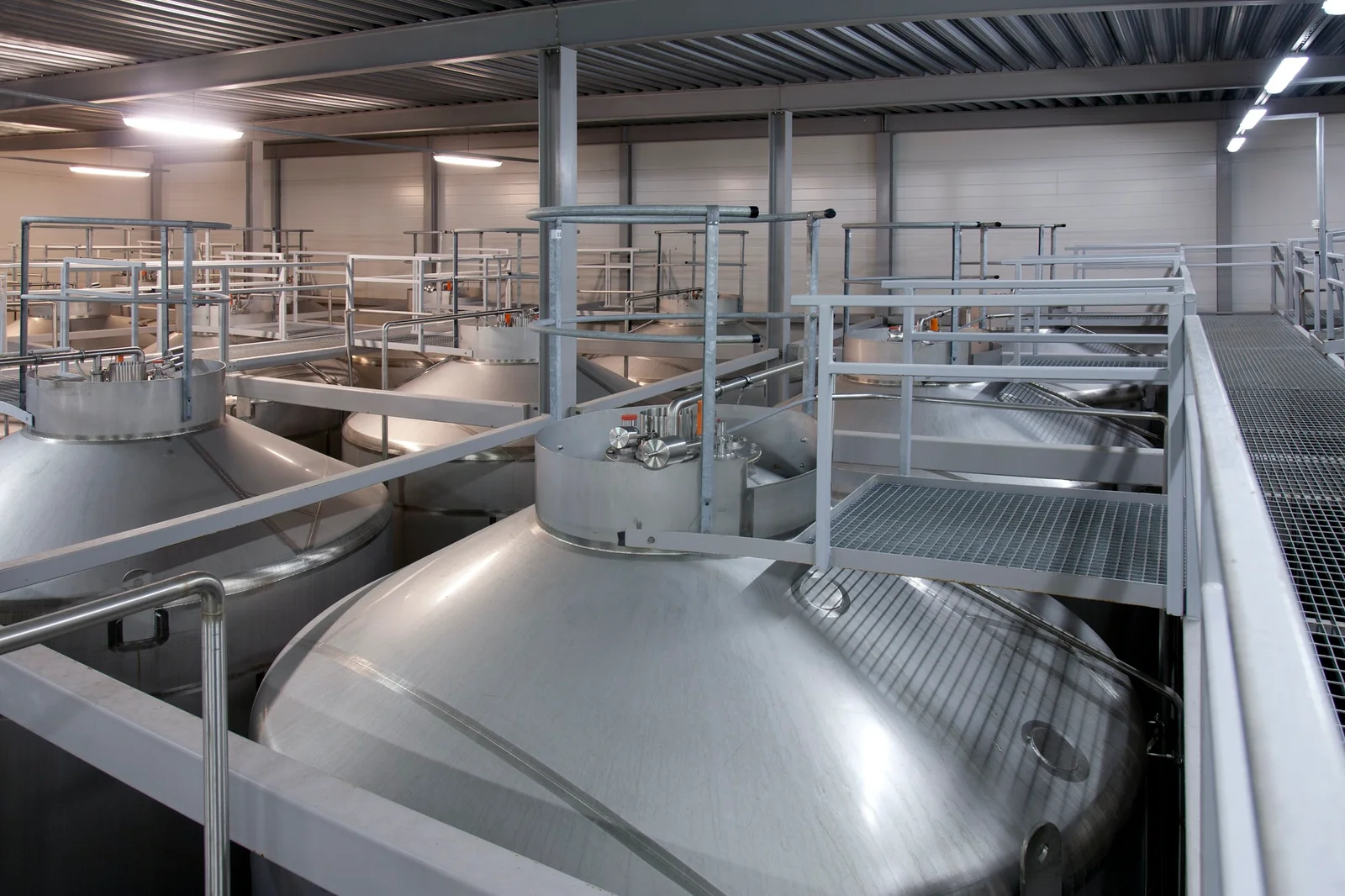
Commercial craft beer equipment gives a brewery better control over output, fermentation, cleaning, labor, and product consistency. A 10-barrel brewhouse produces about 310 U.S. gallons per full batch because 1 U.S. beer barrel equals 31 gallons. In 2024, U.S. craft brewers produced 23.1 million barrels, while 9,796 craft breweries were operating nationwide, according to the Brewers Association. For an individual brewery, commercial equipment makes repeatable production easier at larger volumes through controlled heating, glycol-cooled fermenters, sanitary stainless-steel vessels, pumps, CIP equipment, instrumentation, and packaging systems designed for regular production rather than occasional brewing.
A small pilot setup can make good beer, but commercial production adds another requirement: producing the same beer repeatedly while moving hundreds or thousands of gallons through the brewery every week. A 10-barrel brewhouse running two batches produces about 620 gallons before process losses, while five brewing days at that rate would put about 3,100 gallons into the cellar.
That production rate changes how equipment has to be planned. One brewhouse may complete several batches before a fermenter finishes a 7-, 14-, or 21-day fermentation and conditioning schedule, so cellar capacity often becomes more restrictive than kettle capacity.
A larger kettle does not automatically create higher weekly output. Fermenter availability, cooling capacity, cleaning time, yeast schedules, transfer time, and packaging speed determine how much saleable beer can actually leave the brewery.
A simple example shows the difference. A 10-barrel system brewing four times each week can produce roughly 40 barrels, or 1,240 gallons, of wort. If the average tank remains occupied for 14 days, the brewery needs enough fermentation space to hold about two weeks of brewing before normal production scheduling is considered.
Commercial fermenters are designed around that longer production cycle. Cooling jackets can be connected to a glycol system, temperature probes can feed controllers, and pressure-rated fittings allow the brewer to monitor and manage fermentation without repeatedly opening the vessel.
Fermentation temperature deserves that level of control because yeast activity produces heat. A room held at 68°F does not guarantee that actively fermenting beer remains at 68°F; the liquid can warm above ambient conditions unless heat is removed through the vessel jacket.
A commercial cooling arrangement can therefore control several tanks independently. One vessel may hold an ale near the upper 60s°F while another is being cold-conditioned close to the low 30s°F, depending on the recipe, yeast strain, tank design, and brewery procedure.
Production consistency also improves when heating and transfer steps can be measured instead of judged mainly by sight or touch. Mash temperature, rest time, wort volume, kettle additions, cooling temperature, fermentation temperature, pressure, and packaging conditions can be recorded for every batch.
In 2024, the Great American Beer Festival competition evaluated 8,836 entries from 1,869 breweries and cideries, with an average of 85 beers entered per category. Commercial breweries operate in an environment where small sensory differences are noticeable, especially when customers repeatedly buy the same packaged or draught brand.
Repeatability comes from controlling measurable steps. A recipe can specify ingredients accurately, but inconsistent mash temperature, transfer volume, cooling time, yeast handling, or carbonation can still change the finished beer.
Sanitary design is another practical reason commercial equipment differs from general-purpose tanks. The FDA's 2022 Food Code describes food-contact equipment materials as safe, durable, corrosion-resistant, nonabsorbent, smooth, and easily cleanable under normal use. Those principles fit brewery equipment because wort, yeast, beer, and cleaning chemicals repeatedly contact vessel surfaces.
Stainless steel is widely used in commercial breweries because properly fabricated surfaces tolerate repeated washing and provide a smooth product-contact area. Weld condition, internal finish, valve design, fittings, dead spaces, drainage, and access for cleaning matter as much as the steel grade itself.
A commercial cleaning arrangement can also reduce the amount of equipment that must be manually opened and scrubbed. CIP spray devices, pumps, dedicated chemical tanks, and sanitary piping allow cleaning fluids to circulate through selected vessels and lines under controlled procedures.
-
A 10-barrel vessel holds roughly 310 U.S. gallons at the nominal beer-barrel conversion.
-
A 20-barrel vessel represents roughly 620 gallons of nominal volume.
-
Ten 20-barrel fermenters provide about 200 barrels of nominal tank capacity.
-
At 14 days of average tank occupancy, cellar planning must account for two full weeks of beer before the next production cycle is available.
The figures are simple, but they show why buying isolated tanks without planning utilities often creates scheduling problems. Refrigeration, hot liquor, electrical capacity, gas or steam supply, water, drainage, compressed gases, and packaging throughput have to support the vessel volume installed.
The equipment layout also affects labor. In a manual brewery, staff may move hoses, open valves, monitor temperatures, operate pumps, measure volumes, remove spent grain, prepare chemicals, clean vessels, and document batches several times during one shift.
Automation can move part of that repeated work into temperature controllers, level instruments, variable-speed pumps, automated valves, timers, and recipe controls. A brewery producing 40 barrels per week has different labor requirements from one producing 400 barrels, even if both make similar beer styles.
Commercial systems can be selected at different automation levels rather than treating automation as an all-or-nothing purchase. A small brewery may automate tank cooling and pump speed while keeping wort transfers manually controlled; a larger plant may use PLC-based sequences for brewhouse operations.
Production losses are another area where equipment selection matters. If a brewery loses 5% of a 20-barrel batch between fermentation, transfer, clarification, and packaging, one barrel—31 gallons—does not reach the packaged-beer stage.
At 100 batches per year, the same 5% example represents about 100 barrels, or 3,100 gallons. The actual percentage varies widely by beer style, dry-hopping level, tank geometry, yeast volume, filtration method, packaging line, and operating practice, so breweries normally measure their own yield rather than rely on one industry-wide percentage.
Closed transfers, correctly sized pumps, low-point drains, properly positioned outlets, stable pressure control, and suitable piping can help reduce avoidable losses. They can also limit unnecessary oxygen exposure after fermentation, when oxygen management becomes much more sensitive than during wort production.
Packaging performance connects directly with cellar design. A canning or kegging line cannot maintain steady output if beer arrives at inconsistent temperature, carbonation, or pressure, so bright beer tanks are often used to hold finished beer under controlled conditions before filling.
A brewery packaging 20 barrels has about 620 U.S. gallons available before packaging losses. At 16 U.S. fluid ounces per can, that nominal liquid volume equals 4,960 sixteen-ounce servings before foam, line losses, tank residue, samples, and rejected packages are deducted.
| Equipment area | Production role | Measurement worth recording |
|---|---|---|
| Brewhouse | Mash, wort separation, boil, whirlpool | Temperature, time, volume, gravity |
| Fermentation cellar | Fermentation and conditioning | Temperature, pressure, gravity, tank days |
| Glycol system | Heat removal | Supply temperature, return temperature, operating time |
| CIP equipment | Vessel and line cleaning | Chemical concentration, temperature, contact time |
| Bright tank | Carbonation and packaging supply | Temperature, pressure, carbonation |
| Packaging line | Kegs, cans, or bottles | Fill volume, rejects, packaged yield |
Recorded production information becomes more useful as the brewery adds staff. If three brewers work different shifts, written setpoints and batch records provide the same reference for a 2026 production run as they did for earlier batches, rather than leaving operating conditions in one person's memory.
Equipment capacity also needs to match the sales model. The Brewers Association reported 23.1 million barrels of U.S. craft beer production in 2024, down 3.9% from 2023, while craft beer represented 13.3% of total U.S. beer volume. In a market where total volume is not automatically growing, buying substantially more capacity than can be used may leave expensive tanks idle.
The brewery count shows the same need for careful sizing. Brewers Association data lists 9,796 U.S. craft breweries in 2024 and 9,578 in 2025, a 2.9% decrease. Equipment planning therefore works better when it starts with realistic weekly production, tank occupancy, packaging volume, available floor area, and utility capacity.
A brewery expecting to produce 1,000 barrels annually does not need the same cellar, heating system, refrigeration plant, or packaging line as a facility planning 10,000 barrels. Future expansion can still be allowed for through additional glycol capacity, spare electrical service, floor space, pipe connections, and room for extra fermenters.
That is where integrated Turn-Key brewery solutions can be useful for projects that need the brewhouse, fermentation tanks, cooling system, CIP equipment, controls, piping, and supporting equipment planned as one production setup rather than purchased separately.
Integration matters because one undersized utility can restrict equipment that appears adequate on paper. Installing six additional 20-barrel fermenters adds 120 barrels, or about 3,720 gallons, of nominal cellar capacity, but the extra tanks are useful only when refrigeration, cleaning, drainage, transfer equipment, and packaging can handle the additional beer.
Safety has to be included in the same equipment plan. Breweries work with hot wort, pressurized vessels, carbon dioxide, cleaning chemicals, wet floors, pumps, electrical equipment, and elevated platforms, so equipment layout affects both production flow and staff exposure.
Pressure-relief devices, accessible gauges, guarded platforms, suitable drainage, chemical procedures, ventilation, and correctly installed electrical systems are ordinary parts of professional brewery design. As production rises from 10 barrels to 20 or 30 barrels per batch, the amount of hot liquid and stored pressure rises with it.
Commercial equipment therefore offers more than larger tanks. The measurable benefits appear in batch capacity, temperature control, sanitation, tank utilization, packaged yield, labor hours, production records, utility planning, and expansion space—areas that can be compared in gallons, barrels, temperatures, percentages, tank days, and packaged units before equipment is purchased.