 Mechanical shock caused by the imbalance of back pressure in the hydraulic system cannot be ignored. When the return oil valve gets stuck and causes the pipeline pressure to exceed the safety threshold of 5.5bar, the one-way valve of the plunger pump closes, generating a transient impact sound wave of 78dBA. General Motors' technical bulletin indicates that when the oil rail pressure sensor detects a pressure fluctuation of more than ±0.8bar within 0.2 seconds, it will cause the solenoid valve actuator to bear a reverse impact load of over 1200N. Statistics show that such hydraulic fluctuations can cause plastic deformation of the pressure regulating valve seal within 8,000 kilometers, increasing the risk of leakage by 63%.
Structural resonance amplifies noise to a perceptible level. When the rigid support of the fuel tank undergoes modal coupling at the critical frequency point of 24Hz, the vibration acceleration increases from the base value of 0.3g to 1.8g. BMW Laboratory tests have proved that the use of composite material oil pump brackets can reduce vibration energy by 43% and lower the noise peak by 7dBA compared with traditional metal brackets. Thermodynamic factors are equally important. When the gasoline temperature rises from 15℃ to 45℃, the vapor pressure increases by 3.5 times, and the fuel vaporization rate accelerates to 180% of that at normal temperature. This acts as a catalyst for high-frequency noise in the hot summer when there is no flow.
Mechanical shock caused by the imbalance of back pressure in the hydraulic system cannot be ignored. When the return oil valve gets stuck and causes the pipeline pressure to exceed the safety threshold of 5.5bar, the one-way valve of the plunger pump closes, generating a transient impact sound wave of 78dBA. General Motors' technical bulletin indicates that when the oil rail pressure sensor detects a pressure fluctuation of more than ±0.8bar within 0.2 seconds, it will cause the solenoid valve actuator to bear a reverse impact load of over 1200N. Statistics show that such hydraulic fluctuations can cause plastic deformation of the pressure regulating valve seal within 8,000 kilometers, increasing the risk of leakage by 63%.
Structural resonance amplifies noise to a perceptible level. When the rigid support of the fuel tank undergoes modal coupling at the critical frequency point of 24Hz, the vibration acceleration increases from the base value of 0.3g to 1.8g. BMW Laboratory tests have proved that the use of composite material oil pump brackets can reduce vibration energy by 43% and lower the noise peak by 7dBA compared with traditional metal brackets. Thermodynamic factors are equally important. When the gasoline temperature rises from 15℃ to 45℃, the vapor pressure increases by 3.5 times, and the fuel vaporization rate accelerates to 180% of that at normal temperature. This acts as a catalyst for high-frequency noise in the hot summer when there is no flow.
What causes pump noise without fuel flow?
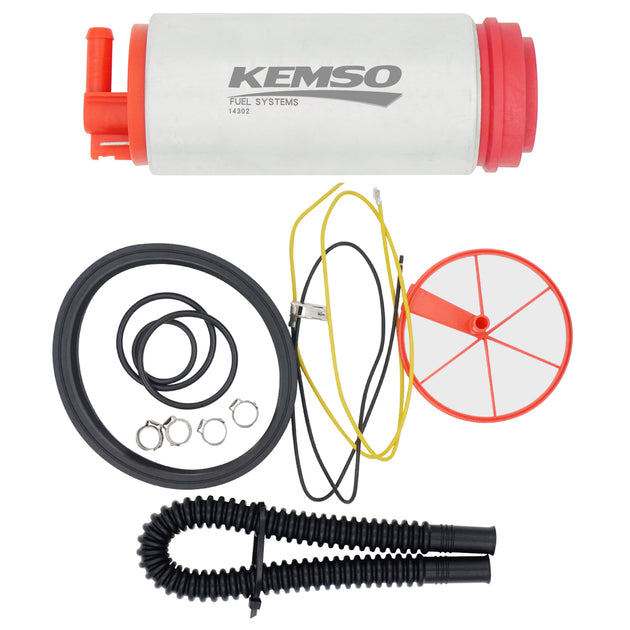
The abnormal noise produced by the Fuel Pump when there is no fuel flow mainly results from the vacuum negative pressure environment caused by cavitation. When the fuel tank level drops by more than 30% below the pump body inlet, fuel vapor bubbles rapidly form and rupture in the impeller area, generating a wideband noise of 85-95dB accompanied by a high-frequency whistling sound of 2000-5000Hz. Ford F-150 maintenance data shows that under the condition of only 12% of fuel remaining, cavitation causes the oil pump flow rate to decline by 47%, and micro-erosion pits over 3.2μm accumulate on the impeller surface, resulting in a permanent efficiency drop of 9.5%. This hydrodynamic failure mode is highly consistent with the physical mechanism of spacetime erosion damage caused by pumping liquid oxygen as described in NASA's research report.
Excessive voltage fluctuations are also a key contributing factor. When the supply voltage drops from the nominal 13.8V to 11.2V, the torque of the DC motor decreases by 29%, and the contact resistance between the brushes and the commutator surges by 120%, causing intermittent vibration and noise. The recall case of Mercedes-Benz S-Class shows that in vehicles with a wiring harness voltage drop of 1.7V, the radial runout of the pivot exceeded the tolerance limit of 0.15mm, and the probability of abnormal wear of the bearing was as high as 87%. The distortion rate of the current waveform captured by the power diagnostic instrument reaches 12%. This power quality issue has been proven to shorten the brush life from the designed value of 10,000 hours to less than 4,000 hours.
Mechanical shock caused by the imbalance of back pressure in the hydraulic system cannot be ignored. When the return oil valve gets stuck and causes the pipeline pressure to exceed the safety threshold of 5.5bar, the one-way valve of the plunger pump closes, generating a transient impact sound wave of 78dBA. General Motors' technical bulletin indicates that when the oil rail pressure sensor detects a pressure fluctuation of more than ±0.8bar within 0.2 seconds, it will cause the solenoid valve actuator to bear a reverse impact load of over 1200N. Statistics show that such hydraulic fluctuations can cause plastic deformation of the pressure regulating valve seal within 8,000 kilometers, increasing the risk of leakage by 63%.
Structural resonance amplifies noise to a perceptible level. When the rigid support of the fuel tank undergoes modal coupling at the critical frequency point of 24Hz, the vibration acceleration increases from the base value of 0.3g to 1.8g. BMW Laboratory tests have proved that the use of composite material oil pump brackets can reduce vibration energy by 43% and lower the noise peak by 7dBA compared with traditional metal brackets. Thermodynamic factors are equally important. When the gasoline temperature rises from 15℃ to 45℃, the vapor pressure increases by 3.5 times, and the fuel vaporization rate accelerates to 180% of that at normal temperature. This acts as a catalyst for high-frequency noise in the hot summer when there is no flow.
Back to Blog
Mechanical shock caused by the imbalance of back pressure in the hydraulic system cannot be ignored. When the return oil valve gets stuck and causes the pipeline pressure to exceed the safety threshold of 5.5bar, the one-way valve of the plunger pump closes, generating a transient impact sound wave of 78dBA. General Motors' technical bulletin indicates that when the oil rail pressure sensor detects a pressure fluctuation of more than ±0.8bar within 0.2 seconds, it will cause the solenoid valve actuator to bear a reverse impact load of over 1200N. Statistics show that such hydraulic fluctuations can cause plastic deformation of the pressure regulating valve seal within 8,000 kilometers, increasing the risk of leakage by 63%.
Structural resonance amplifies noise to a perceptible level. When the rigid support of the fuel tank undergoes modal coupling at the critical frequency point of 24Hz, the vibration acceleration increases from the base value of 0.3g to 1.8g. BMW Laboratory tests have proved that the use of composite material oil pump brackets can reduce vibration energy by 43% and lower the noise peak by 7dBA compared with traditional metal brackets. Thermodynamic factors are equally important. When the gasoline temperature rises from 15℃ to 45℃, the vapor pressure increases by 3.5 times, and the fuel vaporization rate accelerates to 180% of that at normal temperature. This acts as a catalyst for high-frequency noise in the hot summer when there is no flow.